

How I started caring about architecture (skip this if you just want to be told what to think)
I have been thinking about how to get more homes built for well over ten years. In 2013, Sam Bowman hired me to the Adam Smith Institute, kicking off 13 years of ongoing collaboration. He believed that housing market restrictions could be the most important supply-side issue in the United Kingdom, and potentially around the world. He convinced me, and housing became one of our main priorities while we both worked at the ASI.
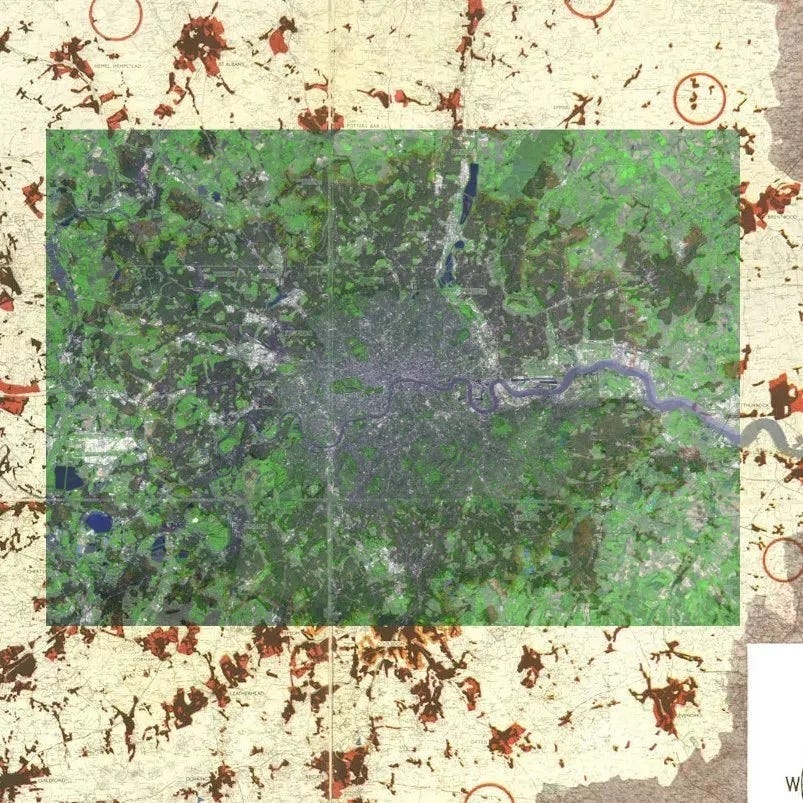
I won’t speak for Sam. He may always have had the sophisticated, detailed, and nuanced perspective on the topic I know he has today. But my own view back in 2013 was pretty simplistic: houses require land; we need more of them; therefore we need to increase the amount of land where a Briton can be granted planning permission to build a house. Like the broader center-right pro-housing movement, I focused on how green belts in the South East have constrained the expansion of cities there. (See Tom Papworth’s rather good paper The Green Noose, for an example of our thinking.)
At the time, I had only the shallowest opinions about the aesthetics of cities: I had once been to Rotterdam and disliked it. In addition, I had barely considered the possibility that, in addition to expanding cities outwards, one could expand them upwards. Nicholas Boys Smith changed all of this. I actually can’t remember what I came into contact with first: it might have been his paper ‘Create Streets’ with Alex Morton for Policy Exchange.1 It might just have been the Create Streets Twitter account. Either way, his work profoundly changed how I thought about the housing issue.
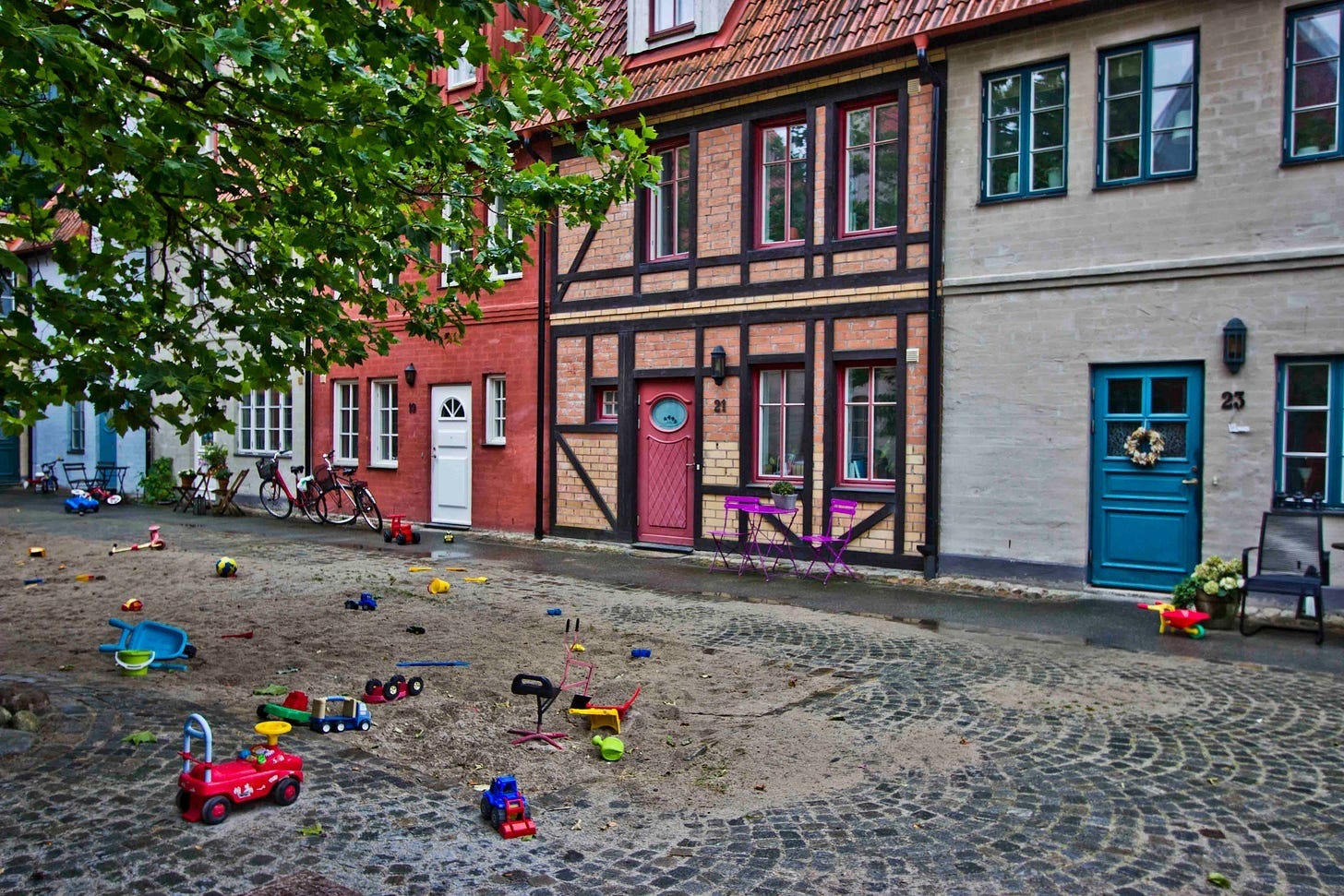
Before Create Streets, I thought that the issue with housing supply was that people didn’t understand that it mattered, or didn’t know that regulatory restrictions were overwhelmingly the main driver of undersupply. Thus, I believed that the task confronting us was simply to convince people there wasn’t enough housing, that regulations were the reason for that, and that allowing more housebuilding would have huge upsides. As surprising as it might seem, I didn’t really consider that people find some housing to be good and nice and some to be bad and not nice.
This set off three trains of thought that have now been in motion for ten years.
The gentle density agenda. I am no longer a gentle density supremacist or an anti-car fanatic. (As you can readily see from my writings on Substack.) But gentle density was drastically underrated in the British housing debate before the 2010s and I think that lots of the easiest wins are here. See for example, the papers I have written on upward extensions and majority-based local upzoning.
The political economy of housing. People in the world of ideas really want to believe that the best way to achieve wins is to repeat their arguments again and again; once they hit on the perfect form of phrasing it, people will be convinced. I did this for many years, but I have become pessimistic about this theory of change, and I now believe that most political economy is about distributing benefits to generate a coalition of support. This has informed a huge fraction of Works in Progress’s articles about housing, including the ones on Houston, Israel, Japan, Vancouver, gentrification, and more.
The aesthetics of housing, which is what this article is about. Pretty much every normal person has approximately the same aesthetic preferences when it comes to housing, and these preferences seem ‘obvious’ to them, and yet these preferences are not reflected in the way we build. What is going on here? And why does a small fraction of people disagree so vehemently?
Who do you believe: me, or your lying eyes?
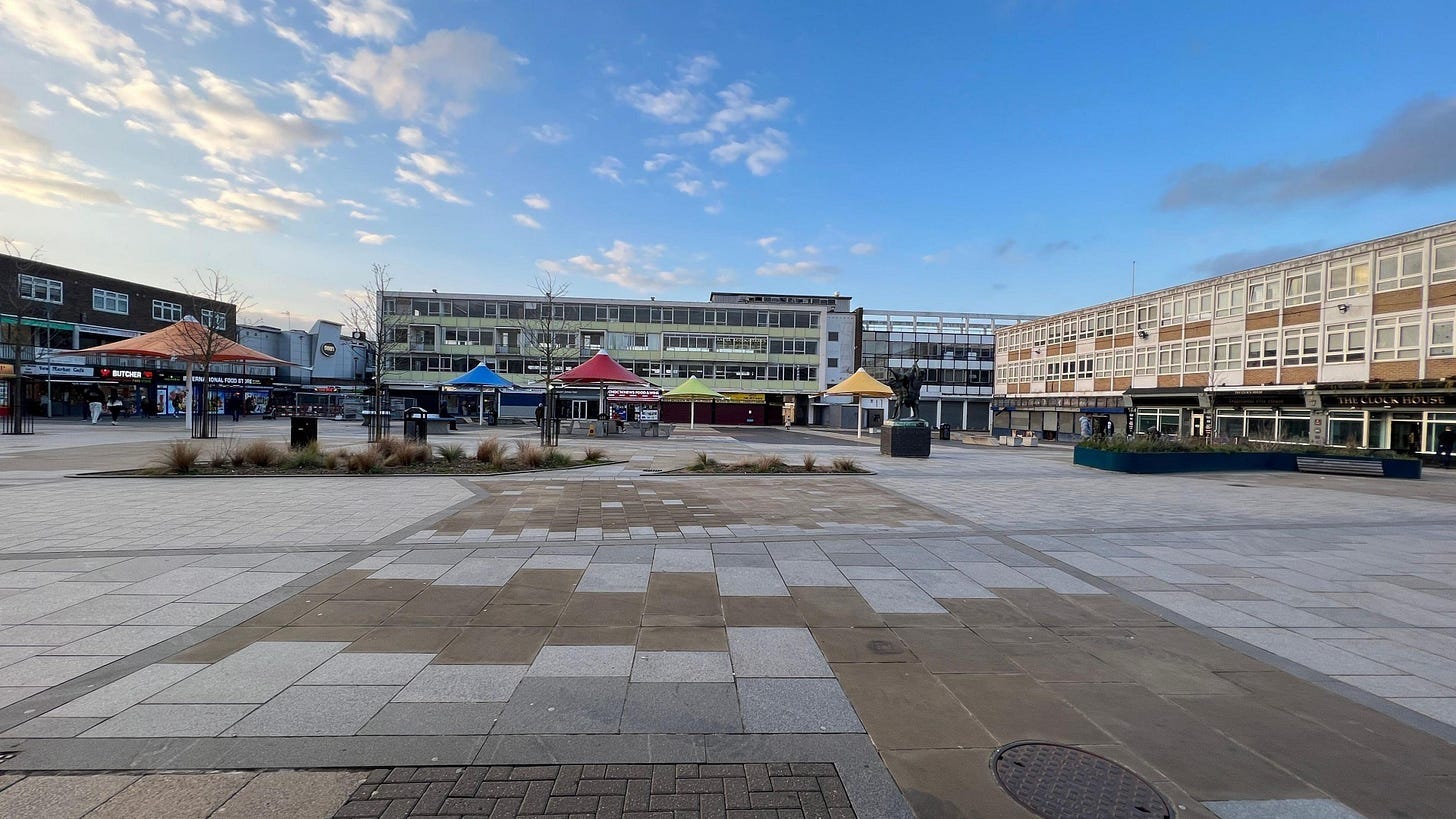
Practically everyone has the same intuitions about architecture. In surveys, 70-80 percent have one (‘the standard’) view, and 20-30 percent have another view. This standard view is that old medieval, renaissance, and Victorian cities are lovely, and that contemporary and postwar built areas are defective in certain ways.
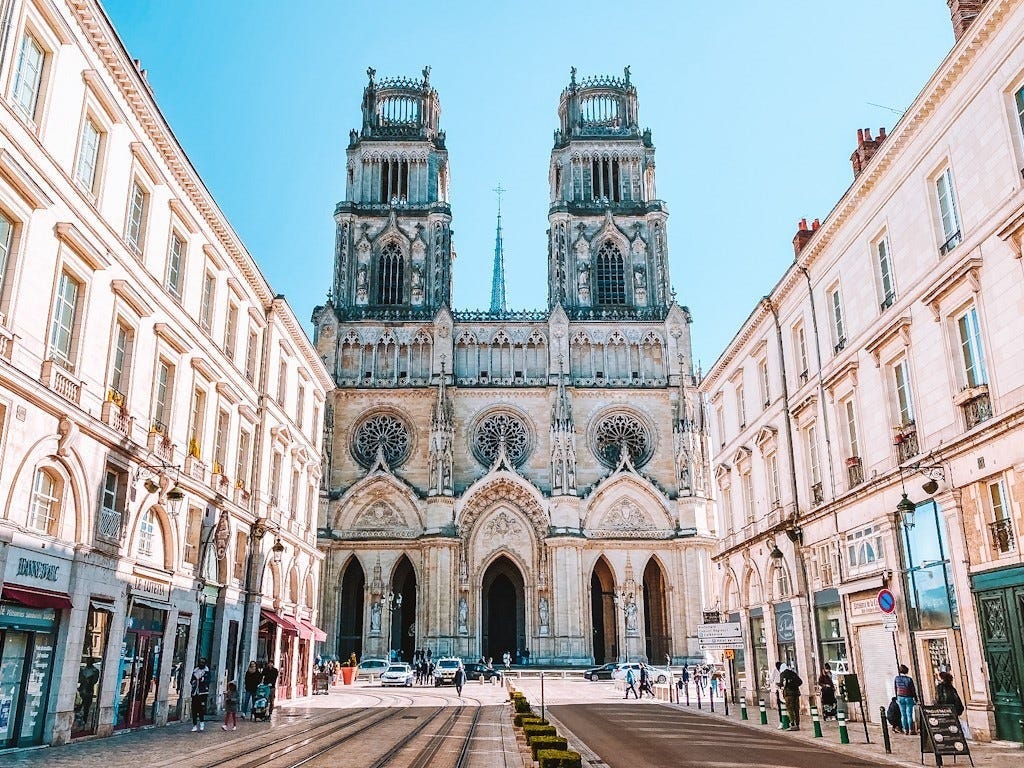
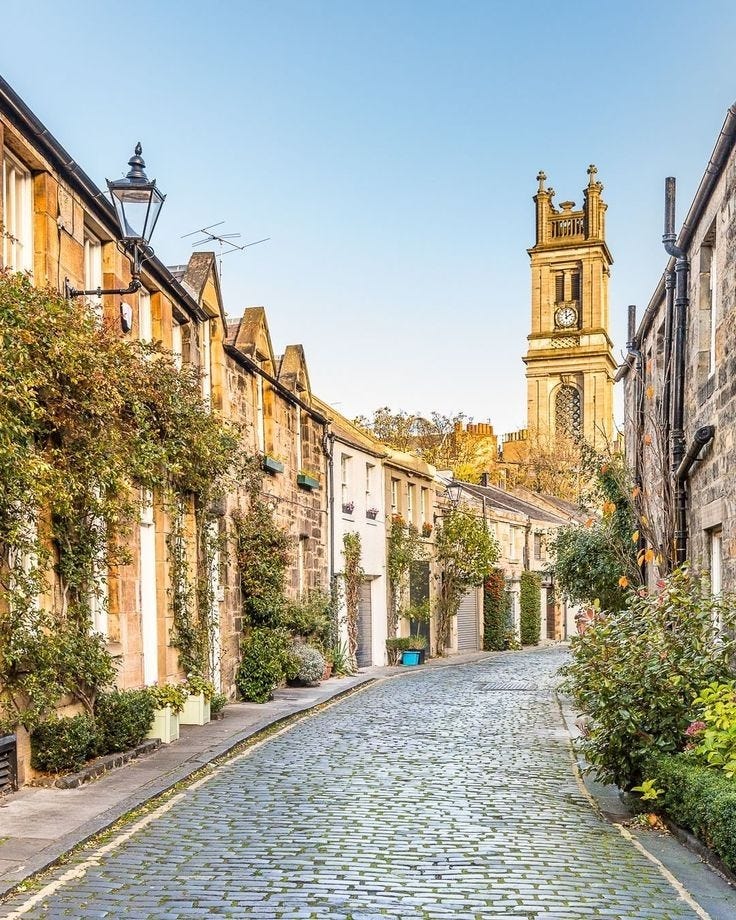
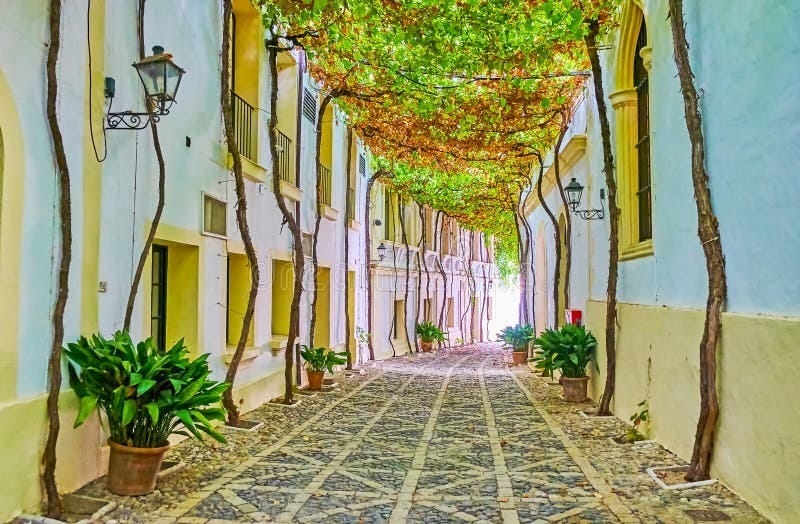
The people of the West are faced with a striking, confusing, almost paradoxical juxtaposition. On the one hand, nearly everyone agrees about what architecture is beautiful and which cities are nice. (Even educated elites who have the sophisticated, nonstandard view know in their hearts that most people disagree with them. That’s part of the appeal of those views!) Yet the world keeps churning out architecture that is not beautiful and cities that are not nice.
This is so confusing, and creates such dissonance, that people have reacted by coming up with elaborate theories to explain why their lying eyes are fooling them.
Ultimately, I think rationalizing the status quo is emotional, not logical. The people who defend the status quo would be status quo defenders in any society. Wet Tories in 1970s Britain had the same psychological profile as the conservative communists in the 1980s USSR resisting glasnost and perestroika.
The alternative views, which do not reject the sensory information from our eyes and which challenge the elaborate theodicies of the status quo, also stem from personality traits – or so I believe. I consider it a psychological tendency that makes someone an advocate of the Tartaria conspiracy theory (which says that a flood buried our larger, wiser, ancestors, and we lost the capability to build beautiful buildings). The parallel fusty-fogey reactionary tendency that makes someone favor the old ways of doing things (whatever they are), is just as psychological. Though fustiness and conspiracizing in these cases is not based on a deep fundamental truth, or on the powers of reason, these two theories do have the virtue of making people immune to rationalizing away ugliness. (My own psychological tendency here is probably toward contrarianism, which drives me towards rejecting the established rationalizations, even if those rationalizations are sometimes correct.)
Yet I am not fatalistic. It is usually worth arguing towards the truth even where most members of a debate are driven by their psychological tendencies. There are at least some important people who have the capability to think the problems through independently, and to change their views in response to evidence. This is why I have for the last five years done all I can to support the work of Samuel Hughes, my friend and colleague, who has written several articles tackling some of the most common canards and rationalizations.
Eight myths about architecture, and what you should believe instead
Even if people mostly accept or reject these myths based on their underlying psychological traits, meaning that we can’t force the horse to drink, we should nevertheless provide the pool of water and lead the horse there just in case.
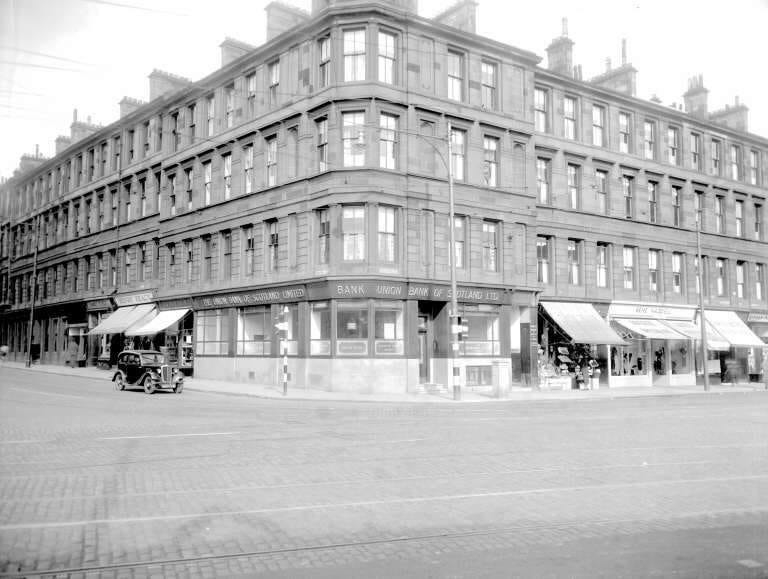
Myth one: buildings from the past seem more beautiful than those built recently only because the ugly buildings from the past have been selectively demolished. This is one of the most powerful myths, which even the most sophisticated thinkers reach for. It just makes sense. Premise one: it appears that the new buildings we are building are uglier than those we used to build. Premise two: this obviously can’t be true. Premise three: the survivorship bias model would explain this apparent paradox, if it applied in this context, and it is obvious why it might apply in this context.
Mostly the theory is simply assumed to apply. I have had many people advance it to me without even giving a single example of an ugly building from the past! I believe that Samuel’s article ‘Against the survival of the prettiest’ is the first one to take the question seriously and attempt to answer it empirically.
One method is to take random sites in cities where prewar buildings were demolished for postwar ones. It is very difficult to find examples that weigh in favor of the postwar building in a direct comparison. In these cases, it doesn’t look like the worst buildings are being selectively demolished. In fact, it’s quite hard to even come up with any ugly buildings from before about 1930, other than makeshift shantytowns like Hoovervilles and The Zone outside Paris. Even historic slums have often survived to become prized today, like Jericho in Oxford, Roupell Street in London, Society Hill in Philadelphia, German Village in Columbus, and the Marais in Paris.


A second method is to look at pictures of the past which capture a large fraction of a city and then try to find ugly buildings. The paintings and drawings Canaletto, Bernardo Bellotto and Eduard Gärtner don’t seem to show any ugly buildings. Ugly buildings appear rare in Britain from Above’s aerial 95,000 photographs of early twentieth-century Britain. Nor do we see this in any other example, like this 1890 photo from Strasbourg’s cathedral.
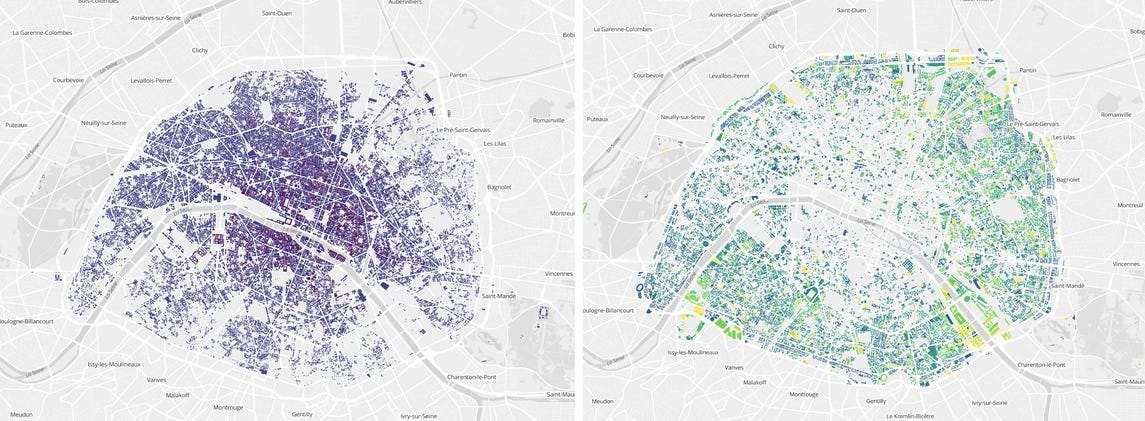
A third method is to consider whether there has actually been much demolition of the relevant stock, originally (so it is argued) peppered with ugly, but now demolished, buildings. Can Paris’s famed nineteenth-century beauty be because of pruning? Given that many parts of nineteenth-century Paris are wholly preserved, probably not!
Parisian buildings built before (left) and after (right) 1914.
Myth two: buildings from the past are more beautiful, but only because they have more ornament, which due to the Baumol Effect, we can no longer afford. This theory is intuitive to a certain kind of economically minded person. This sort of person is less given to blindly trusting the cultural elites that the evidence their eyes give them is wrong, and notices that one of the main distinctions between postwar and prewar architecture is ornament, but expects that there must be a good reason for this. The proposed good reason is that ornament is intrinsically labor intensive, meaning that it gets more expensive when labor goes up in price due to technological progress.
The survivorship bias story is, I think, clearly false in its simple and strong form, but the degree of proof we can provide is limited, and convincing only to those with an open mind. By contrast, the Baumol story is now rejected by all who are aware of Samuel’s ‘The beauty of concrete’.
The problem is that ornament doesn’t have to be labor intensive: it was already being industrialized in the time of the Romans! In fact, sculpture was not always by the named artist’s hand: it was usually done by an apprentice with a machine after a clay or plaster design by the master. By the late-nineteenth century, ornament was built at scale in factories, and the gigantic income and wage increases of the nineteenth century led to people consuming more and more of it. The Baumol story is not remotely tenable.
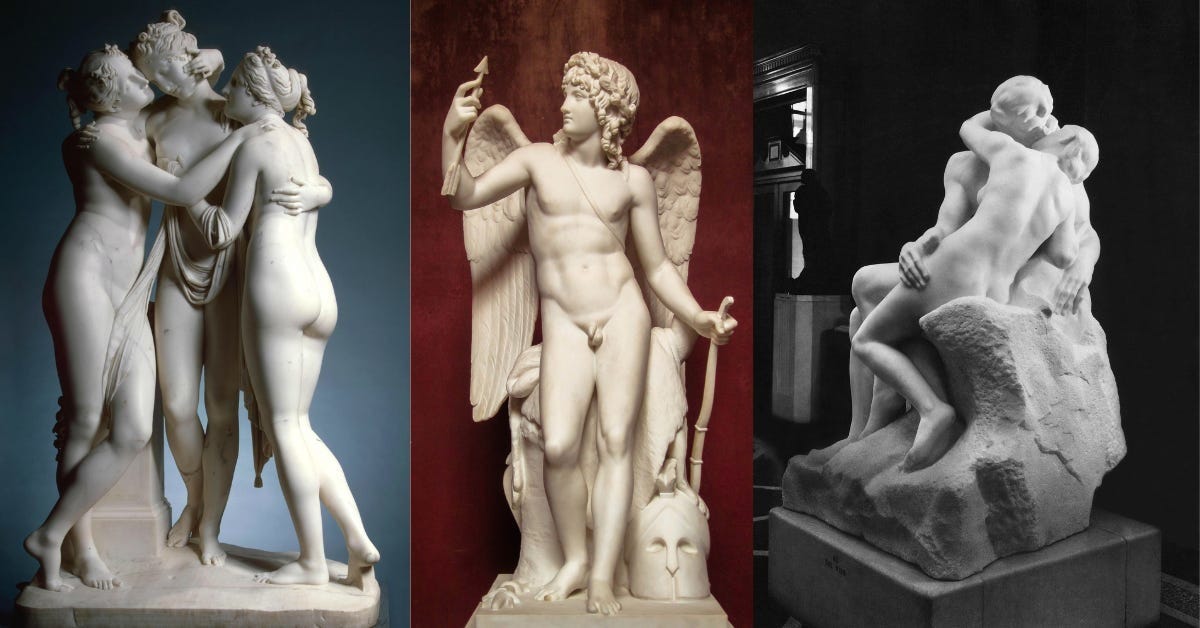
Myths one and two, along with myth eight, are the three legs of the rationalization stool. But there are some more minor myths. Myth three: because NIMBYs object to beautiful buildings as much as ugly ones, it doesn’t matter which we build. Samuel tackled this in ‘Beauty In My Backyard’. It’s basically true that beauty is rarely pivotal in the approval or denial of any particular development, but this doesn’t mean beauty and ugliness are irrelevant if, like the young me, you care only about the volume of housebuilding. Heritage protections in the West were minimal to nonexistent before the 1940s. Between 1945 and 1970 they exploded to cover almost every old city-center building, freezing urban cores in place forever. The most plausible explanation for this is that people found new development to be ugly.
Myth four: historically we built in the style of the times, and only in recent decades have people become interested in historicist, ‘pastiche’ architecture, which dishonestly pretends to be something it is not. This is factually incorrect, as Samuel showed in ‘In Praise of Pastiche’. Nearly all architecture has been unoriginal and copied historic styles. And nearly all historical architecture has been ‘dishonest’. Even classical Greek temples carved stone to appear to be the wood of prehistoric Greek tradition. Greek revival houses in the US were often made of wood painted to look like marble, which was itself emulating wood.
Myth five: for buildings to best perform their functions, they ought to be unadorned utilitarian boxes. This idea is known as functionalism. But its inventor, Louis Sullivan, believed that part of the function of a building was to look like a good example of the kind of building it is. In ‘Machines for Living In’, Ralph Stefan Weir shows that because context has such a profound effect on how we appreciate and interpret art, buildings usually perform their function better if they excel at looking like the kind of building they are.

Myth six: ornament fell out of fashion because it became so cheap. This is the inverse of the ‘ornament fell out of fashion because it became so expensive’ story, and the idea is that ornament had been used as a status signal for rich people, but that the reliability of the signal broke down because ornament was industrialised so effectively. Something about this story (elites went from signalling wealth to taste) does seem true, but the exact contour of this argument seems false (explains Samuel in ‘Cheap ornament and status games’), because modernism swept through all of the arts at roughly the same time, yet analogs don’t exist for every art form. Live music was becoming relatively more expensive, literature was already cheap, and non-ornamental sculpture remained extremely expensive. Yet all of these saw modernist takeover at roughly the same time.
Myth seven: taste is subjective. Of course, in some completely defensible philosophical sense, aesthetic taste is entirely subjective. But in a more practical sense, taste is pretty predictable and pretty broadly shared, at least in the developed West, where most surveys so far have been carried out. 60-90 percent of people prefer vernacular and traditional architecture over modernism (though ‘traditional’ versus ‘modernist’ is a problematic comparison, as there are surely more potential popular architectural styles to be discovered). Read all about this in Robert Kwolek’s comprehensive investigation of the evidence, which will be part of Issue 25 of Works in Progress, with subscribers next week.
An additional important point, which doesn’t really challenge a ‘myth’: there is a case for ‘easy’ architecture, architecture that most people like, even if that is not the best possible architecture. This is for three reasons. One, architecture is inherently public, unlike most other artistic mediums. Whereas I can listen to challenging music on my headphones and offend noone, if we pumped music out of speakers in the town square, it would make sense to choose a style that most people could appreciate. Two, it is mostly produced by humdrum architects rather than geniuses. Whereas in music we can listen to only the best if we so choose, in architecture we have no choice but to experience lots of average architects. But perhaps only genius architects can pull off difficult or challenging styles. And three, it is a background art, not one we largely focus on, like a film set. This means we want it to form a suitable background to what we are doing, which in a street is a wide variety of basic things like shopping and walking. For that, we don’t want challenging, striking sets, we want easily approachable, inoffensive ones.
The future of Samuel Hughes
There is a remaining myth, which is very important but which has not yet been tackled: myth eight, that buildings of the past appear more beautiful to us only because taste moves in cycles. Our judgements of past fashions give us some insight into how much our taste is driven by social cues. ‘How is it possible that the clothes of the early 2010s looked good to me back then?’, I wonder to myself. (Especially compared to the objectively good fashions of now and of the 1980s, 1990s, 1970s, and pretty much all times except for ten to fifteen years ago, actually.) These judgments appear in complex ways. As well as pure fashion, people tend to prefer environments that look cared for, and sometimes designs they associate with wealth or exclusivity.
People have taken this clear fact of fashion cycles existing, and combined it with architectural history. Some elite architectural commentators of the late-nineteenth century (like Augustus Pugin) hated then-popular Italianate architecture and harkened back to the more honest medieval buildings. Today’s normie hates brutalism in the same way that late Victorians disliked Georgian architecture and Georgians Elizabethan architecture, this argument goes. Thus, in a generation or two we will all like modernism.
I believe this to be false, but only because I have read lots of unpublished drafts of an upcoming essay by Samuel Hughes. You are very welcome to advocate for this view until his piece comes out.
Here’s where I repeat all of my usual theories, but in a nice fresh context
Why does all of this matter? Beauty matters intrinsically, because we value it and live among it, and because lives immersed in more beauty are better, more enjoyable and fuller lives. It also matters because ugliness begets stagnation. I believe that if the public expected that new buildings were actually going to be more attractive and generally better than old ones, as the Georgians and Victorians and interwar people did, then we would find it easier to build more homes, relieving one of the world’s (and especially Britain’s) biggest roadblocks to growth.
But it goes deeper than this. The ugliness of the modern world kicked in just before our culture, society, politics, policy and economics became stuck. It seems to me that one good candidate to explain this sticking is that the public lost faith that elites were making good decisions on behalf of society at large, and withdrew their consent for the kind of wide judgement-based discretion that elites had briefly enjoyed. One of the clearest and most visible cases of elite failure, from the perspective of society, is ugliness.
We live in the world that this withdrawal of the Mandate of Heaven created. Left-wing governments find it difficult to build a case for raising taxes and funding public goods; right-wing governments find it difficult to build a case for deregulating and raising efficiency. Our institutions are becoming more and more sclerotic. Every social bargain becomes more difficult to pull off.
Fixing sclerosis may take a comprehensive programme of reforms akin to those of the seventeenth and eighteenth centuries. Fixing ugliness would only be a small part of this. But it would be a part we noticed every day.
I discovered this much later, so it’s not really part of the story, but see also the excellent 2012 paper Why Aren’t We Building Enough Attractive Homes?, which I still consider to be the best introduction to the political economy of housing in the UK.
On myth 3: I find it annoying when people say nimbys don't care about beauty because it just assumes that they're a homogeneous group with the same views and motivations (also usually assumed to be unreasonable) . If they're instead a political coalition, then ensuring that new buildings are beautiful could either 1) shrink the coalition a bit or 2) make some of them at least object less than they currently do. Both of those seem worthwhile in terms of getting stuff built.
This is excellent. I'd love to read next about interiors. As an Edith Wharton scholar, I've been long interested in the ways that she narrates the transition from gas to electricity inside the most glorious of the buildings and how retrofitting displaced tenants. (Thus summer homes.) Also indoor plumbing and the decision to tear down and start anew or retrofit.